Explore Match Previews and Sports Odds with nohut10.com: A Bankroll Manager’s Angle
Three findings stand out when you look at match previews and sports odds through the eyes of a bankroll manager rather than a casual fan. First, previews are filters, not forecasts. They help you see the game more clearly, but they never remove uncertainty. Second, odds carry a built-in cost: the bookmaker’s margin sits inside every price, and beating that margin consistently is harder than beating the game itself. Third, stake sizing decides your survival. A bettor who picks 50% winners with flat stakes can still lose money over time, while a bettor who picks 45% winners but stakes according to edge can come out ahead. The difference is discipline.
The Quick Answer for Beginners
If you are new to this, here is the short version. A match preview is a structured look at an upcoming game: form, injuries, motivation, playing style, and context. Sports odds are prices that tell you what the market thinks is likely. Decimal odds of 2.00 imply a 50% probability; odds of 3.00 imply about 33%. To convert decimal odds into implied probability, divide 1 by the odds.
Platforms like nohut10.com bring these two elements together, letting you compare the story of the game with the numbers attached to it. The temptation is to treat the preview as a prediction and the odds as a challenge. A bankroll manager treats both as raw material for a decision that includes one more variable: how much of the bankroll to put at risk.
Before placing any bet, write down three things: what you think will happen, what the odds imply will happen, and what you are willing to lose. If the first two disagree, you have a potential value bet. If the third is uncomfortable, you have no bet at all.
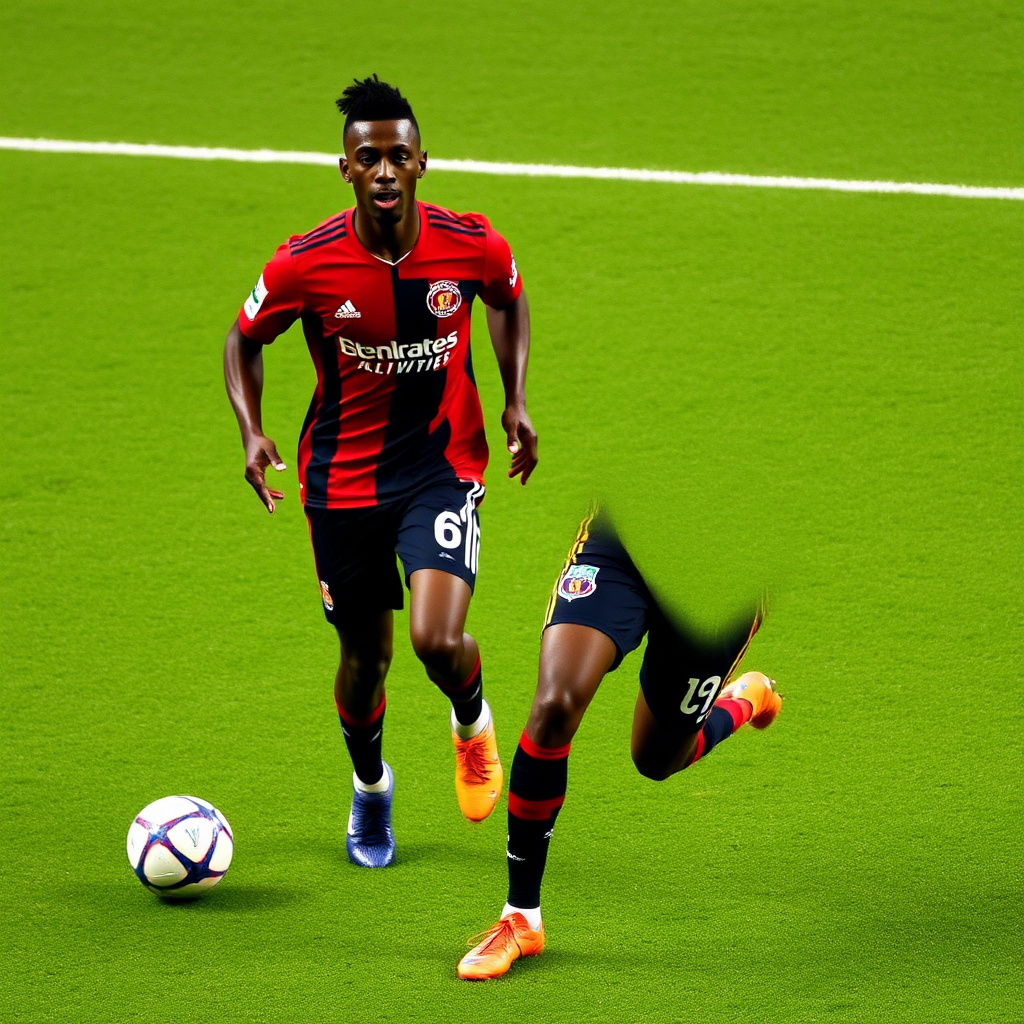 Hình minh hoạ: NOHU
Walking Through One Round
Let us walk through a hypothetical round of matches to see how difficulty, pace, and risk change the way you should think. These are illustrative examples, not real fixtures or real odds.
Match A is a league leader at home against a bottom-three side. Difficulty: low. The quality gap is obvious, and the preview will probably confirm it. Pace: controlled. Risk: low in the sense that the outcome is predictable, but the odds will be short, so the margin for error is thin. If the favorite wins eight times out of ten, a price below 1.30 leaves almost no value.
Match B is a mid-table clash between two teams with contrasting styles: one presses high, the other sits deep and counters. Difficulty: medium. Pace: uncertain. Risk: medium. The outcome is genuinely open, and the odds will reflect that, so there is room to find value if your read differs from the market.
Match C is a local derby with relegation and pride on the line. Difficulty: high. Form goes out the window, and motivation becomes the dominant variable. Pace: fast, emotional, and chaotic. Risk: high. Public money often inflates the favorite’s price in derbies, creating a distorted market. A disciplined approach is to avoid this game entirely or stake well below your normal level.
When you open a preview page on a platform such as NOHU, the first thing to check is not the predicted winner but the reasoning behind the prediction. Does the preview mention lineup changes? Does it discuss pace and style? Does it flag motivation issues? If the preview only lists recent results, it is not adding much beyond what the odds already reflect.
| Match | Difficulty | Pace | Risk Profile | Bankroll Consideration |
|---|---|---|---|---|
| Match A: Leader vs bottom side | Low | Controlled | Predictable outcome, thin margin | Low value; small stake or skip |
| Match B: Mid-table styles clash | Medium | Uncertain | Open outcome, fair odds | Moderate stake if your read differs |
| Match C: Local derby | High | Fast, emotional | Distorted market, high variance | Below-normal stake or no bet |

Analyzing Each Betting Option
Different bet types fit different games. A bankroll manager matches the bet type to the difficulty and pace of the match rather than defaulting to the same market every time.
Match Result (1X2)
The simplest option: home win, draw, or away win. It works well in low-difficulty games where the favorite is clearly stronger, but the short odds often make it unattractive. It also works in medium games where the draw is underpriced. Avoid using 1X2 in derbies and cup matches where motivation skews the market.
Over/Under Goals
This market depends on pace and style more than on the winner. A high-pressing team against a deep defense can produce either a goalfest or a frustrating stalemate. Over/under bets are useful in medium-difficulty games where you have a strong read on how the game will be played rather than who will win. The risk is that one early goal changes the entire dynamic.
Both Teams to Score
BTTS is a binary market: yes or no. It suits games where both teams attack but neither defends reliably, and it is a good filter for high-pace games. The downside is that a single red card or an early defensive collapse can ruin the bet in either direction. Keep the stake modest.
Asian Handicap
Asian handicap removes the draw and gives one team a virtual head start. It is useful for a bankroll manager because it lets you bet on the margin of victory, not just the result. In a game where the favorite is overpriced, a positive handicap on the underdog can offer genuine value. The complexity is higher, so beginners should wait until they understand how quarter and half handicaps settle.
Double Chance
Double chance covers two of the three outcomes, which lowers the risk and the price. It is a bankroll-preservation tool, useful when you want exposure to a game but do not trust one side. It should not be a regular strategy because the reduced odds rarely offer value.
Live Betting
In-play betting changes everything. Pace becomes visible, and you can react to how the game is actually being played. But it also invites impulsive decisions. If you bet live, set a rule in advance: one live bet per match, a fixed maximum stake, and no betting after the 70th minute unless you have a specific reason.

Real Risks You Cannot Preview Away
No preview, no odds comparison, and no analytical system can remove the core risks of sports betting. The first is variance. A 55% win rate sounds strong, but in 100 bets you can easily hit a losing run of ten or more. If your staking is too aggressive, that run will end your bankroll before the long-term edge shows.
The second risk is the margin. Every market includes the bookmaker’s profit. Over time, the margin grinds down your bankroll unless your selections are good enough to overcome it. This is not a flaw in the system; it is the system.
The third risk is emotional. Winning streaks create overconfidence. Losing streaks create chasing behavior. Both lead to bigger stakes, worse selections, and a distorted view of your own skill. The best protection is a written plan that includes loss limits and a rule to stop betting for a fixed period after a bad day.
The fourth risk is information asymmetry. Lineups are often announced late. Injuries, weather, travel, and motivation are all moving parts. A preview written two days before the match can be outdated by kickoff. Always check the latest team news before placing a bet, and treat any preview that ignores late changes with suspicion.
Finally, remember that sports betting is not a guaranteed income stream. It is a form of entertainment with a negative expected value for most participants. The goal is not to get rich; it is to manage the bankroll well enough that the entertainment lasts and the losses stay within your comfort zone.

A Disciplined Strategy That Respects the Bankroll
A disciplined strategy starts with a bankroll that you can afford to lose entirely. That number should be separate from rent, savings, and everyday expenses. Once it is set, divide it into units. A common approach is to use 1% to 2% of the bankroll per bet as a flat stake. This keeps a losing run from destroying the bankroll.
Three staking methods are worth knowing:
- Flat staking: the same stake on every bet. Simple, predictable, and easy to track. Best for beginners.
- Percentage staking: a fixed percentage of the current bankroll. As the bankroll grows, stakes grow; as it shrinks, stakes shrink. This protects you during losing runs.
- Fractional Kelly: stake a fraction of the edge divided by the odds. More efficient in theory, but it requires accurate probability estimates. If you overestimate your edge, Kelly punishes you. Use a quarter or half Kelly at most.
Whatever method you choose, keep a record of every bet: the match, the market, the odds, the stake, the reasoning, and the result. Review the record after every 50 or 100 bets. Look for patterns in your losses. Are they concentrated in certain markets? Certain days? Certain types of games? That review is worth more than any single prediction.
Here is a simple checklist before every bet:
- Have I read the latest lineup and injury news?
- Does the preview explain the reasoning, not just the prediction?
- Does the odds value match my own probability estimate?
- Is the stake within my 1% to 2% rule?
- Am I betting for a clear reason, not because I am bored or chasing a loss?
If the answer to any of these is no, skip the bet. There will always be another match.
Recommendations by Reader Group
For beginners, the best path is to bet small, bet flat, and bet only on match result or over/under in low-difficulty games. Use previews to learn how the game works, not to find a guaranteed winner. Accept that losses are part of the learning process.
For casual bettors who bet for fun, treat sports betting as a paid entertainment cost. Set a monthly limit, never raise it mid-month, and avoid live betting unless you have pre-set rules. The goal is to enjoy the game without the bankroll becoming a source of stress.
For experienced bettors, focus on value detection. Learn to calculate implied probability, compare it with your own assessment, and use fractional Kelly when the edge is clear. Spend more time on medium-difficulty games and Asian handicap markets, where the market is more efficient and the mistakes of casual bettors create opportunities.
For anyone who has felt the urge to chase losses, the recommendation is blunt: stop betting for a while. Set a hard loss limit, take a break, and use the tools that platforms and regulators offer for responsible participation. The bankroll will recover only if you let it. The match will still be there when you return.